Till now, we talked about:
Now a very natural question comes:
“Okay, but how does all this actually work in India?”
“Who controls it?”
“Is my money safe?”
Let me explain this calmly, step by step.
First, Understand One Simple Thing
You don’t directly buy shares from a company.
You buy and sell shares through a system that is already set up, monitored, and regulated.
In India, this system has three main pillars:
- Stock Exchanges
- Regulator
- Brokers & Demat system
Once you understand this, half of your fear goes away.
What Is a Stock Exchange?
A stock exchange is simply a marketplace.
Just like:
- Vegetable market → vegetables
- Mobile store → phones
Stock exchange → shares
In India, we have two main stock exchanges:
- National Stock Exchange (NSE)
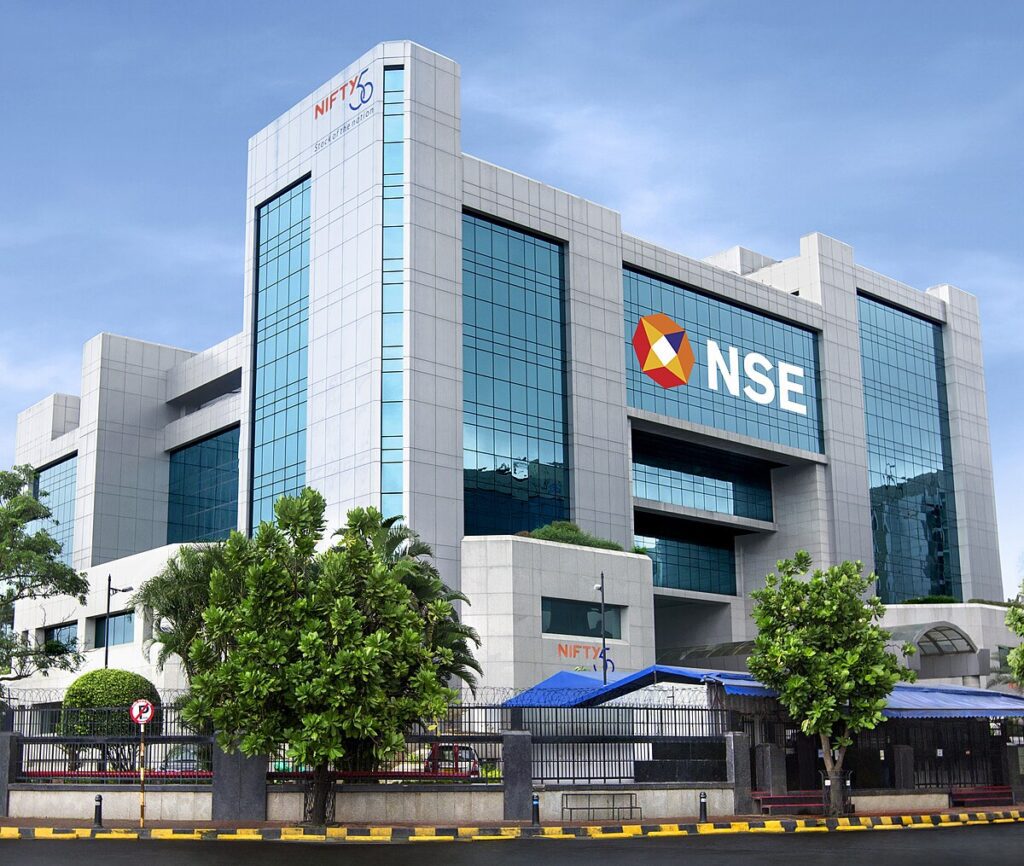
2. Bombay Stock Exchange (BSE)
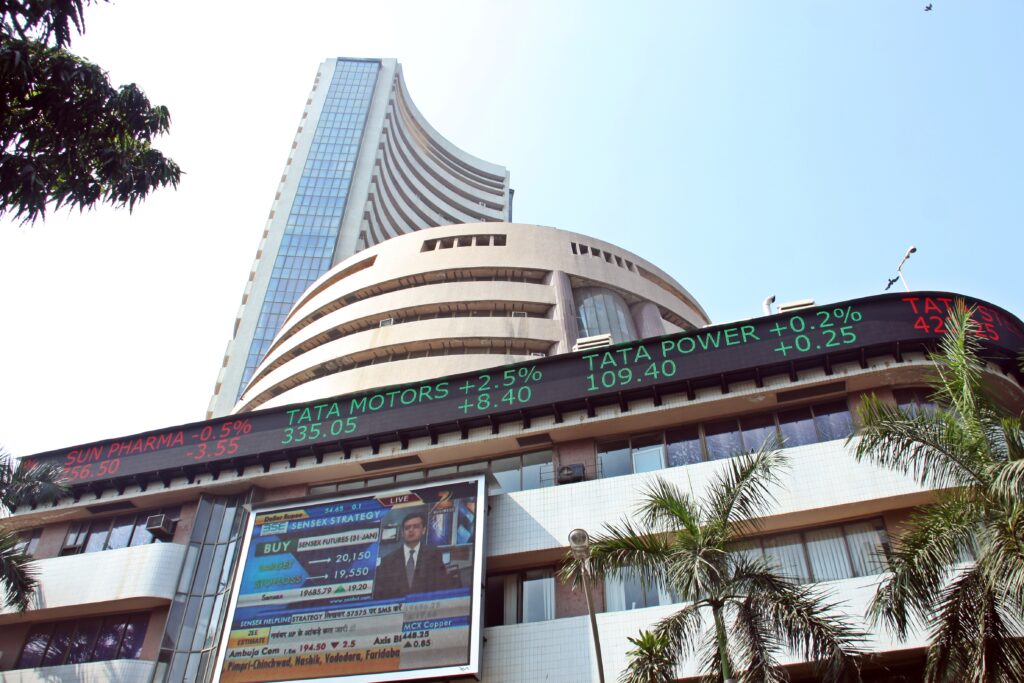
NSE and BSE in Simple Words
Both NSE and BSE:
- Provide a platform to buy and sell shares
- Match buyers and sellers
- Show transparent prices
If you buy a share on NSE or BSE:
👉 Price is decided by demand and supply, not by brokers.
Most big companies are listed on both exchanges.
What Are NIFTY and SENSEX?
You often hear:
- “Market is up today”
- “Market is down today”
This usually means:
- NIFTY 50 (top 50 companies on NSE)
- SENSEX (top 30 companies on BSE)
Think of them like:
The overall health report of the market
If NIFTY is rising:
- Most big companies are doing well
If NIFTY is falling:
- Market mood is weak
Who Controls the Stock Market in India?
This is very important.
The Indian stock market is regulated by Securities and Exchange Board of India (SEBI).
SEBI’s job is to:
- Protect investors
- Stop fraud and manipulation
- Make rules for fair trading
SEBI does not make you profit.
But it makes sure:
👉 No one cheats you easily.
Is the Stock Market Safe?
Let me answer this honestly.
The system is safe.
But decisions are your responsibility.
SEBI ensures:
- Fair prices
- Transparent trading
- Proper company disclosures
But SEBI cannot stop:
- Emotional decisions
- Blind tips
- Greed or panic
That part is on us.
What Role Does a Broker Play?
A broker is like a bridge.
You cannot directly go to NSE or BSE.
You need a broker to:
- Place buy/sell orders
- Hold shares in Demat account
- Connect bank + market
Examples: Zerodha, Groww, Angel, etc.
Important point:
Broker only executes your order.
Decision is always yours.
How a Share Trade Actually Happens (Very Simple)
Let’s say you buy 1 share.
- You place BUY order on app
- Broker sends it to exchange
- Exchange finds a seller
- Trade happens
- Share comes to your Demat account
All this happens in seconds.
One Very Important Truth
Please remember this:
The Indian stock market is not a gambling den.
It is a well-regulated financial system.
People lose money not because the system is bad,
but because they act without understanding.
Final Words (From a Mentor)
You don’t need to know everything at once.
You only need to:
- Trust the system
- Learn step by step
- Avoid shortcuts
Once your foundation is strong, confidence comes naturally.
What’s Coming Next
In the next blog, we will talk about something very practical:
👉 What Is a Demat Account and Why You Need It to Buy Shares
This will clear all doubts about:
- Where shares are stored
- How ownership works digitally